
· Updated · 4 min read
How Health Insurers Deny Claims — What Seniors Should Know
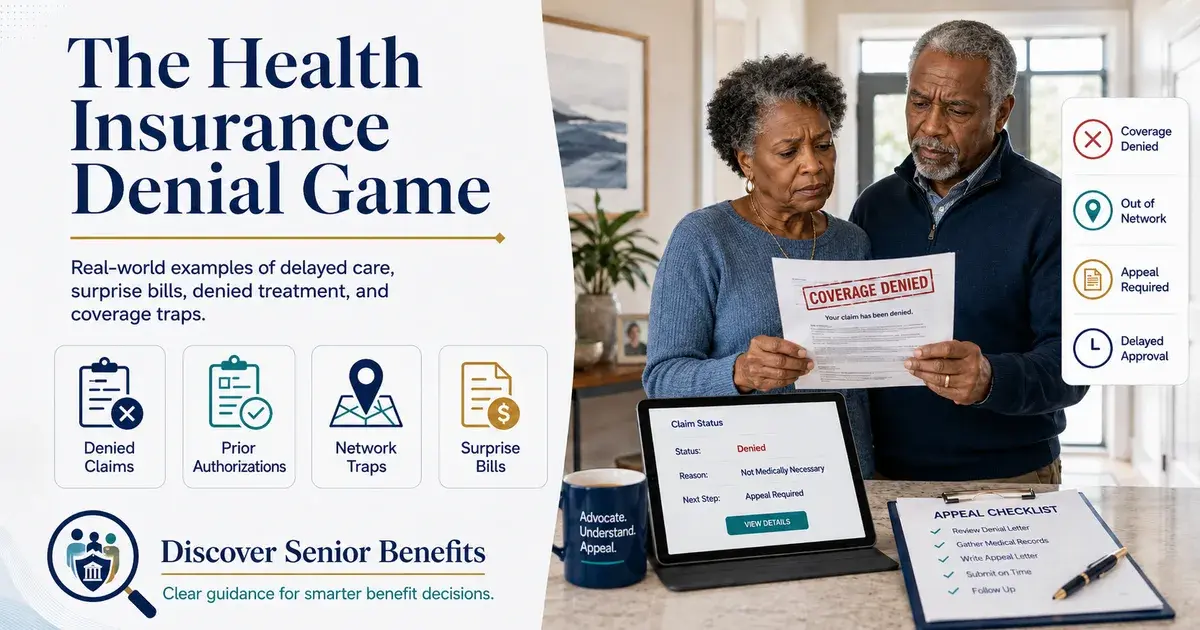
Insiders from billing offices, doctor's offices, and insurance companies are speaking out about tactics used to deny or delay coverage — and seniors are often the most vulnerable targets.
Key takeaways
- Medicare Advantage plans can restrict your network, meaning your regular doctor or preferred hospital may be out of network and cost far more.
- Insurance reps have been known to lie to seniors during Medicare open enrollment, claiming providers are in network when they are not.
- Insurers may send denial notices late on a Friday to reduce the chance of a successful appeal — act quickly if you receive one.
- Prior authorizations can be reversed after care is given, leaving patients responsible for bills they believed were covered.
- Traditional Medicare with a supplement plan may offer more flexibility — you can see any doctor, go to any hospital, and skip referrals.
- Always verify in writing that your specific doctor AND the facility are both in network before any procedure.
Tactics Used to Deny or Delay Coverage
People who work inside health insurance companies and medical billing offices have shared a troubling pattern of tactics designed to make it harder for patients to get paid.
One common move: sending denial notices or faxing paperwork to a facility late on a Friday afternoon. By the time staff return Monday, the short appeal window may have already closed. This is not an accident — it is a strategy.
Other reported tactics include:
- Backdating claim records to make a filing look late
- "Losing" paperwork that was submitted correctly
- Denying proven treatments as "experimental" to avoid paying
- Requiring patients to re-prove they need a medication they have been stable on for years, triggering months of delays
These delays are not just frustrating — they can have serious health consequences, especially for older adults managing chronic conditions.
Seniors in Senior Living Facilities Are Especially at Risk
One social worker described finding a senior living facility where nearly every resident had been enrolled in the same HMO plan — often without their knowledge. Many were told their doctors were still in network when they were not.
HMO plans are known for having the most limited provider networks. When seniors are enrolled without understanding what they signed up for, they may unknowingly lose access to their regular doctors and specialists.
The sales representative who enrolled the entire building reportedly earned a commission for doing so. This kind of predatory enrollment is a real risk, particularly for older adults in group living settings who may not review plan documents closely.
Medicare Advantage: What Insiders Are Saying
Several insiders specifically called out Medicare Advantage plans as problematic, particularly in rural or Midwest areas where provider networks are thin.
Key concerns raised:
- Network restrictions mean that if you need care at a larger hospital, it may be out of network and cost significantly more
- Medicare Advantage reps are sometimes seasonal workers focused on hitting enrollment numbers — some have been reported to lie to seniors about which providers are in network
- Prior authorizations can be approved and then reversed months later, leaving patients responsible for bills they thought were covered
One insider noted that traditional Medicare paired with a supplement plan may be a better option for many seniors. With that combination, you can go to any hospital, see any doctor, skip referrals, and know your out-of-pocket costs upfront. Always confirm details with a licensed counselor or your State Health Insurance Assistance Program (SHIP) before switching plans.
The Out-of-Network Trap
Even when you choose an in-network facility and an in-network doctor, you can still receive a surprise bill. Anesthesiologists, radiologists, and other specialists who work at in-network hospitals are sometimes not in network themselves.
During an emergency, patients have no realistic way to check whether every provider treating them is in network. Yet insurers may still deny those claims.
Before any scheduled procedure, ask your insurer — in writing — to confirm that both the facility and every provider involved are in network under your specific plan. Get a reference number for that confirmation.
What Caregivers and Seniors Can Do
Navigating insurance denials is stressful, but there are steps that can help:
- Appeal every denial. Insurers count on patients giving up. Submit appeals in writing and keep copies of everything.
- Act fast on denial notices. Appeal windows can be very short — sometimes just days.
- Ask for everything in writing. Verbal confirmations from insurance reps carry little weight. Get network status and authorization confirmations documented.
- Use free Medicare counseling. The State Health Insurance Assistance Program (SHIP) offers free, unbiased help comparing Medicare plans. Counselors do not earn commissions.
- Review plan documents carefully at enrollment. Do not rely solely on what a sales representative tells you.
- Check your Explanation of Benefits (EOB). Review every EOB after a medical visit to catch billing errors or unexpected denials early.
The agency or program — not a sales rep — makes the final determination on what is covered. When in doubt, contact the insurer directly and document the conversation.
Programs in this article
See which of these programs you may qualify for. Free, no SSN, about five minutes.
Find my benefitsSources
Program facts in this article trace to these official pages, the same ones the eligibility rules cite.
- State Health Insurance Assistance Program (SHIP) · acl.gov · Last verified · September 19, 2026
- Qualified Medicare Beneficiary (QMB) · medicare.gov · Last verified · September 19, 2026
- Specified Low-Income Medicare Beneficiary (SLMB) · medicare.gov · Last verified · September 19, 2026
- Qualifying Individual (QI) · medicare.gov · Last verified · September 19, 2026
Not legal or financial advice. The agency makes the final eligibility decision.
Related articles
5 min read
4 Retirement Tax Surprises and How to Manage Them
Retirement taxes can be more complicated — and more costly — than many people expect. Here are four common tax surprises retirees face, plus strategies to help reduce the impact.
5 min read
Medicare Part D Changes, Social Security Tips, and What Seniors Need to Know Now
Major shifts in Medicare Part D drug coverage and Medicare Advantage plans are coming. Here is what seniors and caregivers need to understand — and do — before open enrollment.
5 min read
Social Security Benefits Most Seniors Don't Know About
An estimated $30 billion in benefits goes unclaimed every year. Here is a plain-language guide to the Social Security programs, Medicare options, and appeal rights that seniors and caregivers most often miss.
Ask this article
Get answers about this article from the assistant on any paid plan.