
· 4 min read
Caregiver Pay and Social Security Benefits for Families
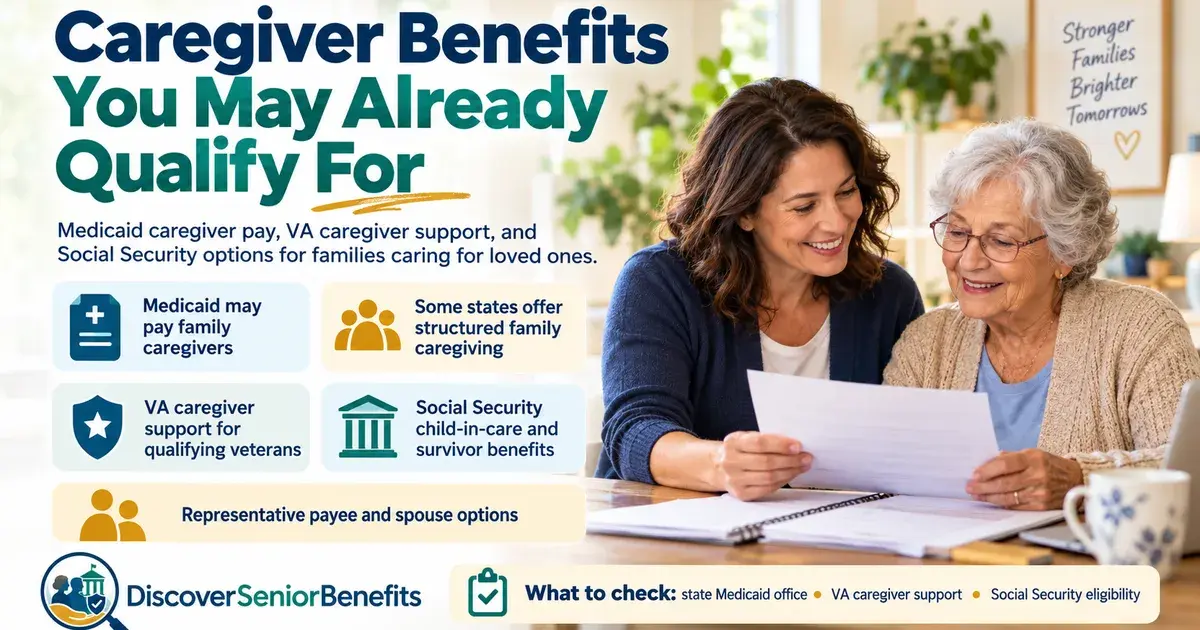
Some states pay family members to care for a loved one at home, and Social Security has benefits for caregivers, spouses, and disabled adult children. Here is what to know before you apply.
Key takeaways
- Medicaid programs in every state may pay a relative, friend, or neighbor to care for a person at home instead of in a facility.
- Caregiver pay can count as work income for Social Security disability (SSDI) and may lead to an overpayment.
- Social Security has benefits for people caring for a child under 16, or a child who became disabled before age 22.
- A spouse who never paid into Social Security may still get benefits on a spouse's or ex-spouse's record.
- Medicare plans can change each year, so compare your plan when new plans start on October 1.
Want to know which programs fit your situation? A free check shows what you may qualify for in about five minutes. No SSN.
Discover my benefitsPaying family to care for a loved one at home
Facility care costs a lot. To save money, states use Medicaid to pay some caregivers instead. A relative, friend, or neighbor may be paid a modest amount to care for a person who would otherwise need a facility. The person may have dementia or other physical or mental health needs.
This kind of program is available through Medicaid in all 50 states. Each state uses its own name for it. It can help in three ways:
- The person stays at home, in a place they know.
- The caregiver earns some money while staying home.
- The state spends less than it would on a facility.
A proposal to pay parents to stay home with children has been in the news. A proposal is not law until it passes. The caregiver programs described here already exist. Contact your state Medicaid agency to ask what is offered where you live.
Structured family caregiving and veteran caregivers
Some states have a program called structured family caregiving. The video named Connecticut, Georgia, Indiana, Louisiana, Massachusetts, Missouri, Nevada, North Carolina, Ohio, Rhode Island, and San Diego. North Dakota and New Hampshire have similar programs. If you live in one of these places, ask the state about caregiving options.
There is also a VA program for people who care for a veteran. It is called PCAFC. If you care for a veteran, look into it.
Warning: caregiver pay can count as income for SSDI
Many people on Social Security Disability Insurance (SSDI) take paid caregiver work. They often assume the money does not count. That can be a costly mistake.
The state may not tax the pay. Social Security still treats it as income from work. This is true even if you are paid to care for your own mother or grandmother. You are hired as a caregiver, so it is a job.
That work can hurt your disability benefits. Some people then get an overpayment notice from Social Security. If you get disability benefits and are thinking about paid caregiving, check with Social Security first.
Social Security benefits tied to caregiving and family
Child in care benefit. A spouse may qualify if the other spouse gets retirement or disability benefits, or has died. You must also care for a child who gets benefits and is either under 16 or became disabled before age 22. The benefit can be up to 50% of the other parent's full benefit if that parent is living. It can be up to 75% if that parent has died.
Family maximum. There is a cap on what Social Security pays one family. Sometimes the children use up the whole amount. Do not assume you do not need to apply. Money may be left later when an older child ages out.
Disabled adult child. A child who became disabled before age 22 and is still disabled can collect on a parent's record. The parent must get retirement or disability benefits, or have died.
Representative payee. Social Security does not recognize power of attorney. If a person cannot manage their own money, Social Security can appoint a representative payee. This can be a relative, friend, or neighbor. The payee receives the check and can talk with Social Security for that person.
Spouse and other family benefits. A spouse, ex-spouse, or widow may get benefits on the other person's record, even if they never paid into Social Security. A disabled widow or widower can get benefits between ages 50 and 59. A parent who depends on an adult child for at least half of their living costs may get benefits if that child dies. This is rare.
Selling a home and Medicare costs
Selling your home can raise your Medicare premium after about two years. This is called the income-related monthly adjustment amount. It is based on your modified adjusted gross income.
The IRS lets you exclude $250,000 of home sale gain if you are single. The limit is $500,000 if you are married. If your gain is over that, your Medicare premium might go up.
Medicare plan changes and free transportation ads
New Medicare Advantage and Part D plans start October 1. You should get a notice from your current plan in September. It explains how your plan will change next year. A better plan may be available, so compare before you stay.
Have your current plan details ready when you call a counselor, such as through your State Health Insurance Assistance Program (SHIP). Check these items:
- Your doctors, hospitals, and clinics
- Your prescriptions and pharmacy
- Costs for specialists and hospital stays
- Extras like transportation, grocery cards, dental, vision, and hearing
Be careful with ads for free rides or grocery cards. These extras may exist, but often only in certain plans, especially dual special needs plans for people with both Medicare and Medicaid. They may not be offered in your area. Callers may face a hard sales pitch, and their information may be sold. A SHIP counselor can tell you what is truly available near you.
Turning 65 while on SSDI
A private disability policy does not affect SSDI. Workers' compensation and public disability programs can. Read the private policy's fine print, though. Some policies reduce their payment by the amount you get from Social Security.
If you are on SSDI and turning 65, you may have more Medicare choices. Before, you may have been limited to a Medicare Advantage plan in many states. At 65, you can ask about Medicare supplement plans such as Plan G or Plan N. You would not be charged extra or denied for pre-existing conditions. If they do not suit you, you can keep your current plan.
Some Medicare plans also pay for gym memberships, such as through SilverSneakers. Details vary by plan, and the agency or plan makes the final decision on what you qualify for.
Programs in this article
See which of these programs you may qualify for. Free, no SSN, about five minutes.
Discover my benefitsSources
Program facts in this article trace to these official pages, the same ones the eligibility rules cite.
- National Family Caregiver Support Program (OAA Title III-E) · acl.gov · Last verified · October 10, 2026
- Supplemental Security Income (SSI) · ssa.gov · Last verified · October 10, 2026
- State Health Insurance Assistance Program (SHIP) · acl.gov · Last verified · October 10, 2026
- VA Health Care · va.gov · Last verified · October 10, 2026
- Senior Medicare Patrol (SMP) · acl.gov · Last verified · October 10, 2026
Not legal or financial advice. The agency makes the final eligibility decision.
Related articles
5 min read
4 Retirement Health Care Decisions to Get Right
Missing a health coverage enrollment window in retirement can mean higher costs that last for years. Here are the four decisions that matter most — and how to approach each one.
5 min read
Medicare Part D Changes, Social Security Tips, and What Seniors Need to Know Now
Major shifts in Medicare Part D drug coverage and Medicare Advantage plans are coming. Here is what seniors and caregivers need to understand — and do — before open enrollment.
5 min read
Social Security Benefits Most Seniors Don't Know About
An estimated $30 billion in benefits goes unclaimed every year. Here is a plain-language guide to the Social Security programs, Medicare options, and appeal rights that seniors and caregivers most often miss.
Ask this article
Get answers about this article from the assistant on any paid plan.