
· 4 min read
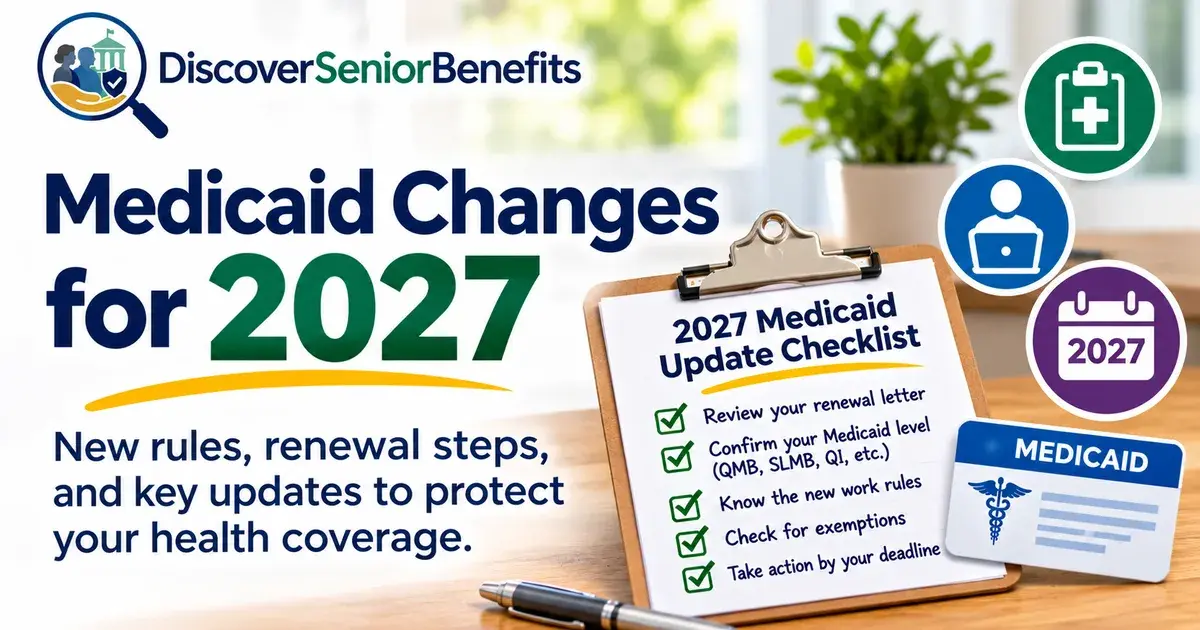
How to Keep Your Medicaid in 2027: Renewal Steps for Seniors
Medicaid renewals may get harder in 2027, and some services may shrink. Here is how to read your letter, protect your paperwork, and avoid a gap in coverage.
Key takeaways
- Medicaid goes by different names in different states, so check whether your health plan is really Medicaid.
- Find out which level of help you have, such as QMB, SLMB, QI, or cost sharing, because each has different rules and benefits.
- Medicare Savings Programs may pay your Medicare Part B premium, which the video puts at $22.90 a month.
- Keep copies of everything, write down who you spoke to and when, and never miss a deadline without contacting the office first.
- If you are cut off, check the appeal section of your letter and ask about continued coverage and any gap in months.
- Expect states to cut some services in 2027, such as home health care or transportation, so ask what is still covered.
Want to know which programs fit your situation? A free check shows what you may qualify for in about five minutes. No SSN.
Discover my benefitsWhy 2027 has people worried
Many people on Medicaid are concerned about keeping coverage in 2027. The video's speaker, a former Social Security manager who also once worked in a Medicaid office, says the system is complicated and the offices are overloaded. Workers may have hundreds of cases each, and paperwork can get lost.
The speaker also says federal cuts to the program mean states will have less money. That could lead to more frequent renewals and fewer services. These are the speaker's views and warnings. Rules differ by state, so confirm details with your own state Medicaid agency.
The main message is simple: if you have a renewal letter, act on it right away.
Know what you have
Many people do not realize they have Medicaid. States use different names for it. Examples named in the video include Health First Colorado, Healthy Louisiana, and Medi-Cal in California. If your health coverage has a state-specific name, check whether it is Medicaid.
Next, find out your level. Medicaid has several levels, including:
- Qualified Medicare Beneficiary (QMB)
- Specified Low-Income Medicare Beneficiary (SLMB)
- Qualifying Individual (QI)
- Cost sharing, where you pay the first part of your costs yourself
If someone says they were kicked off Medicaid, ask what really happened. You may have been moved to a lower level, or you may have lost coverage entirely. Each level has different rules and covers different things. The speaker also says QI requires a new application every year.
Ask about Medicare Savings Programs
Medicare Savings Programs help pay Medicare costs. The video says they may cover the Part B premium, which it puts at $22.90 a month. QMB, SLMB, and QI are the levels of this help.
If you already have Medicaid but it is not paying your Part B premium, call and ask whether you qualify for a higher level. If you do not have Medicaid and struggle to pay for Medicare, you can apply. The video also warns that some people may be downgraded to cost sharing, so check that your coverage still matches your level after each renewal.
Work rules and expected service cuts
The video says new federal work requirements do not apply if you are 65 or older. People ages 19 to 64 are the ones facing those rules. Some people under 65 may qualify for an exemption if they are medically frail. States are still working out how that will be proven.
Even if you are exempt from work rules, the speaker warns that states may cut services. Home health care, transportation, vision, dental, and hearing coverage could be reduced. Some doctors may stop taking Medicaid patients if payments drop. Ask your plan what is covered for 2027 and do not assume last year's services will continue.
Some adults may also have to renew every 6 months instead of once a year. That gives paperwork twice as many chances to go wrong.
If you are under 65: proving medical frailty
Adults under 65 may be asked to show they are medically frail, meaning a condition seriously limits their ability to work. The video offers these tips:
- Do not assume the state already knows. Social Security disability may help, but VA disability may not count in every state.
- Ask what proof is needed, when it is due, and whether you can get an individual review.
- If your doctor writes a note, ask what it must say. Use a doctor who treats your actual condition.
- Describe your treatment, your bad days, and the help you need.
- Some states may accept a signed statement. The video names Nebraska and Montana as examples, but warns that rules can change.
If you cannot get proof in time, contact the Medicaid office before the deadline.
Handle your renewal paperwork
Start with the letter. It should say your next step. Then:
- Ask what they need, the due date, and whether a copy is fine or an original is required.
- Ask how to send it (fax, email, mail, or in person) and who exactly should get it.
- Keep your address up to date so you do not miss mail.
- Keep a copy of everything. Write down who you gave it to, the date, and the time.
- Follow up a few weeks later. Ask if they got it, if anything is missing, and if your coverage is active.
If a document is missing, ask what other proof they will accept. The speaker notes that states are supposed to renew people using information they already have when possible.
If you are cut off or have a gap
Read the reason in your denial letter. It may say paperwork was late or missing. If you did send it, say so and give the date and the name of the person you gave it to. The video says offices can sometimes reopen a case without a full appeal.
If you do need an appeal, the letter explains how to ask for a hearing. Ask whether your coverage can continue while you appeal, especially if you have appointments or medicine to refill. If you miss a deadline, ask the agency to reopen your case.
Watch for gaps. If your renewal is processed late, make sure coverage continues without skipping a month. A missed month could leave you with bills for doctor visits or prescriptions.
For help with Medicare plan choices, free counseling is available through your State Health Insurance Assistance Program (SHIP). The video also mentions reviewing your Medicare Advantage plan during open enrollment, which it says starts October 15.
Programs in this article
See which of these programs you may qualify for. Free, no SSN, about five minutes.
Discover my benefitsBenefits in your area
Pick your state to see the programs that serve your county.
Sources
Program facts in this article trace to these official pages, the same ones the eligibility rules cite.
- Qualified Medicare Beneficiary (QMB) · medicare.gov · Last verified · November 20, 2026
- Specified Low-Income Medicare Beneficiary (SLMB) · medicare.gov · Last verified · November 20, 2026
- Qualifying Individual (QI) · medicare.gov · Last verified · November 20, 2026
- State Health Insurance Assistance Program (SHIP) · acl.gov · Last verified · November 20, 2026
Not legal or financial advice. The agency makes the final eligibility decision.
Related articles
4 min read
Medicaid Work Rules in 2027: What Seniors and Families Should Know
New Medicaid work and renewal rules take effect in 2027. Here is who they may apply to, how exemptions work, and how to keep good records so coverage is not lost.
5 min read
2027 Social Security Letter: Which Line Matters for Your Birth Year
A 3.6% raise is coming in 2027, but the line on your Social Security letter that matters depends on the year you were born. Here is what each age group should check before January.
5 min read
Social Security & Medicare Penalties: How to Avoid Them
Millions of Americans pay more than they should because of Social Security and Medicare penalties they never saw coming. Here is what each penalty is, why it happens, and how to protect yourself.
Ask this article
Get answers about this article from the assistant on any paid plan.